
Introduction
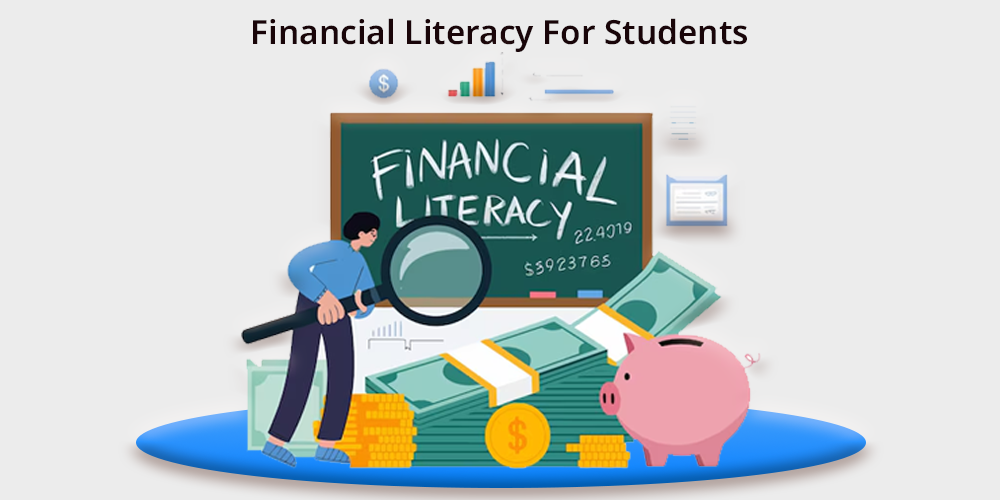
Financial literacy is one of the most important life skills that students should develop during their educational journey. It refers to the ability to understand and manage money effectively. This includes learning how to save, budget, spend wisely, understand banking, manage debt, and make informed financial decisions.
Many students spend years studying mathematics, science, history, and other academic subjects, but they may receive limited practical education about personal finance. As a result, some young adults enter professional life without understanding how to manage their income, control expenses, or plan for future financial responsibilities.
In today’s world, financial knowledge is becoming increasingly important. Students regularly make financial decisions involving education expenses, shopping, subscriptions, digital payments, and personal savings.
Learning financial skills early can help students become more responsible with money and prepare them for independent adult life.
This article explains why financial literacy matters for students and how they can develop healthy money management habits.
1. Understanding the Meaning of Financial Literacy
Financial literacy means having the knowledge and skills needed to make responsible financial decisions.
It involves understanding basic financial concepts and knowing how to apply them in everyday situations.
Some important areas of financial literacy include:
-
Budgeting and expense management.
-
Saving money regularly.
-
Understanding bank accounts.
-
Learning about interest rates.
-
Managing loans and debt.
-
Understanding credit.
-
Recognizing financial scams.
-
Planning for future expenses.
For example, a financially aware student understands that spending all their monthly allowance immediately may create problems later.
Instead, they learn to divide their money between essential expenses, savings, and personal activities.
Financial literacy is not only about earning more money. It is also about managing available resources wisely.
2. Helps Students Develop Budgeting Skills
Budgeting is one of the most useful financial skills students can learn.
A budget is a plan that explains how much money a person receives and how that money will be spent.
Students may receive money from parents, scholarships, part-time employment, internships, or other sources.
Without a budget, it can become difficult to understand where money is going.
A simple student budget may include:
| Expense Category | Monthly Budget |
|---|---|
| Food | $100 |
| Transportation | $50 |
| Study materials | $40 |
| Personal expenses | $40 |
| Savings | $70 |
| Total | $300 |
Illustrative example only. Actual expenses depend on location and individual circumstances.
Creating a budget helps students prioritize important expenses and avoid unnecessary spending.
They can also compare planned expenses with actual spending at the end of each month.
This habit encourages financial discipline and better decision-making.
3. Encourages the Habit of Saving Money
Saving money is an important part of financial security.
Students who begin saving early can develop habits that remain useful throughout adulthood.
Even small amounts can make a difference when saved regularly.
For example, a student who saves a portion of their monthly allowance may eventually have enough money to purchase educational materials, a laptop, or other important items.
Saving also teaches patience.
Instead of buying something immediately, students learn to wait, plan, and work toward a financial goal.
A simple way to start is to set a monthly savings target and track progress.
Students should also understand the difference between saving for short-term needs and building longer-term financial reserves.
4. Teaches Students How Banking Works
Understanding banking is another important part of financial education.
Banks and financial institutions provide services that help people store, transfer, and manage money.
Students should understand basic banking concepts such as:
Savings Accounts: These accounts allow individuals to deposit money and may provide interest according to the bank’s terms.
Current Accounts: These are commonly used for frequent transactions and business activities.
Debit Cards: These allow account holders to make payments using available funds in their bank accounts.
Digital Banking: Mobile and internet banking allow customers to check balances, transfer money, and manage certain banking services online.
Interest Rates: Interest represents the cost of borrowing money or the return earned on certain savings products.
Understanding these services can help students become more confident when managing their finances.
5. Helps Students Understand Debt and Loans
Borrowing money can be useful in certain situations, but it also creates financial responsibilities.
Students should understand how loans work before taking on debt.
A loan generally involves borrowing money from a lender and agreeing to repay it according to specific terms.
Important loan concepts include:
-
Principal amount.
-
Interest rate.
-
Repayment period.
-
Monthly installment.
-
Late payment fees.
-
Total repayment amount.
For example, a student who borrows money for education should understand how much they will need to repay and when repayment begins.
They should also compare loan terms carefully rather than focusing only on the amount borrowed.
Learning about debt early can help students avoid unnecessary borrowing and make more informed financial decisions.
6. Develops Responsible Spending Habits
Modern students are constantly exposed to advertisements, online shopping platforms, entertainment subscriptions, and promotional offers.
These marketing messages can encourage unnecessary spending.
Financial literacy helps students distinguish between needs and wants.
Needs are essential expenses such as food, transportation, educational materials, and basic clothing.
Wants are additional purchases that may improve comfort or entertainment but are not essential.
Before purchasing something, students can ask themselves:
-
Do I really need this item?
-
Can I afford it without affecting important expenses?
-
Is there a more affordable alternative?
-
Should I save the money instead?
-
Am I purchasing it because of advertising or social pressure?
Developing thoughtful spending habits can help students avoid waste and maintain better control over their finances.
7. Introduces Students to the Basics of Investing
Investing is another financial concept that students should understand.
Investing generally involves putting money into assets or financial products with the expectation of potential future returns.
Common investment categories include stocks, bonds, mutual funds, and other financial instruments.
However, investments involve different levels of risk, and returns are not guaranteed.
Students should first understand basic concepts such as:
Risk and Return: Investments with higher potential returns may also involve greater risk.
Diversification: Spreading investments across different assets can help reduce exposure to a single investment.
Compound Interest: Earnings may generate additional earnings over time when returns are reinvested.
Long-Term Planning: Investment decisions should consider financial goals, time horizons, and risk tolerance.
Students should focus on learning before investing real money. They should also be cautious about online promises of guaranteed profits.
8. Protects Students From Financial Scams
Financial scams have become increasingly common in the digital world.
Students may encounter fake investment opportunities, fraudulent shopping websites, phishing emails, suspicious job offers, and misleading financial advertisements.
Some scammers promise quick profits or request personal information through fake messages.
Financial literacy helps students recognize warning signs.
Important safety practices include:
-
Never share passwords or one-time verification codes.
-
Avoid clicking suspicious links.
-
Verify websites before making payments.
-
Be cautious of guaranteed investment returns.
-
Never send money to unknown individuals without proper verification.
-
Use strong passwords and account security features.
-
Contact financial institutions through official channels.
Understanding these risks can help students protect their money and personal information.
9. Supports Better Career and Future Planning
Financial education can help students prepare for professional life.
After completing their studies, many individuals face new financial responsibilities, including rent, transportation, food, insurance, taxes, and household expenses.
Students who understand money management may find it easier to plan for these responsibilities.
They can learn how to compare salary offers, estimate living expenses, create emergency savings, and set financial goals.
For example, a student preparing to enter the workforce can estimate how much of their expected income will be required for essential expenses.
This preparation can make the transition from education to employment more manageable.
10. Encourages Financial Independence
Financial independence means being able to manage personal financial responsibilities without unnecessary dependence on others.
Students can gradually develop independence by learning to manage their allowances, control expenses, save money, and understand financial services.
Financial independence does not mean that students must manage every financial responsibility alone.
Parents and teachers can provide guidance while allowing students to practice making age-appropriate financial decisions.
These experiences help young people develop responsibility and confidence.
11. The Role of Schools and Parents in Financial Education
Financial literacy should become an important part of student education.
Schools can introduce practical financial lessons through mathematics, economics, business studies, and dedicated financial education programs.
Students can participate in activities such as creating budgets, comparing prices, understanding bank statements, and calculating interest.
Parents can also support financial learning at home.
They can encourage children to save a portion of their allowance, discuss everyday purchasing decisions, and explain the importance of planning expenses.
Real-life examples often make financial concepts easier to understand.
12. Practical Ways Students Can Improve Financial Literacy
Students do not need advanced financial knowledge to begin managing money responsibly.
They can start with simple habits:
-
Track daily spending.
-
Create a monthly budget.
-
Set realistic savings goals.
-
Learn basic banking terminology.
-
Understand how interest works.
-
Research financial products carefully.
-
Avoid unnecessary debt.
-
Learn how to recognize online scams.
-
Read reliable financial education resources.
-
Review financial goals regularly.
These small steps can help students develop a stronger understanding of personal finance.
Conclusion
Financial literacy is an essential life skill that every student should learn. It helps young people understand budgeting, saving, banking, borrowing, investing, and responsible spending.
Developing financial knowledge early can reduce the risk of poor money management and prepare students for future financial responsibilities.
Schools, parents, and educational institutions should work together to make financial education more accessible and practical.
Academic knowledge is important for building a career, but understanding how to manage money is equally valuable for building a stable life.
By developing good financial habits during their student years, young people can become more confident, responsible, and financially prepared adults.
Next article: Article 10 – How Students Can Develop Better Learning Habits and Time Management Skills.
Bhai, iske baad tumhare 10 education articles ka complete collection taiyar ho jayega.
This might also interest you.
Article 10: How Students Can Develop Better Learning Habits and Time Management Skills
Category: Education
SEO Focus Keyword: Learning Habits and Time Management Skills for Students
Meta Description: Discover practical learning habits and time management strategies that help students improve concentration, manage their schedules, reduce stress, and achieve academic success.
Introduction
Success in education is not determined only by intelligence or the number of hours a student spends studying. It also depends on developing effective learning habits and managing time wisely. Many students work hard but struggle to achieve their desired academic results because they lack a proper study routine, become easily distracted, or find it difficult to balance their academic and personal responsibilities.
Developing better learning habits can make studying more productive, enjoyable, and less stressful. Similarly, good time management skills help students complete assignments on schedule, prepare for examinations, and maintain a healthy balance between school, hobbies, family, and social activities.
In today’s fast-paced world, students face many distractions, including smartphones, social media, online entertainment, and other digital activities. Learning how to stay focused and organize daily responsibilities has therefore become more important than ever.
This article explores practical ways students can develop effective learning habits and time management skills to improve their academic performance and prepare for a successful future.
1. Set Clear and Achievable Learning Goals
One of the most important steps toward becoming a successful student is setting clear learning goals. Without specific goals, students may find it difficult to understand what they want to achieve or how to measure their progress.
Learning goals provide direction and motivation. Instead of simply deciding to study more, students should create specific objectives, such as completing two chapters of a textbook, solving 20 mathematics problems, or revising a particular topic before the end of the day.
Students can divide their goals into three categories:
-
Short-term goals: Tasks that can be completed within a day or a week.
-
Medium-term goals: Objectives that may take several weeks or months.
-
Long-term goals: Bigger academic achievements, such as completing a course or preparing for an important examination.
Goals should be realistic and measurable. Setting impossible targets can create unnecessary pressure and reduce motivation. Small achievements build confidence and encourage students to continue improving.
2. Create a Consistent Study Schedule
A well-organized study schedule helps students use their time more effectively. Instead of deciding what to study at the last minute, students should plan their academic activities in advance.
A study timetable should include:
-
Regular study periods.
-
Time for completing homework and assignments.
-
Revision sessions.
-
Short breaks between study sessions.
-
Time for exercise, hobbies, and relaxation.
-
Adequate sleep.
Students should identify the times of day when they feel most focused. Some students concentrate better in the morning, while others prefer studying in the afternoon or evening.
A consistent routine also makes studying a habit. When students follow a regular schedule, they are less likely to postpone important tasks or waste time deciding what to do next.
However, a timetable should remain flexible. Unexpected responsibilities may arise, so students should allow some extra time for changes.
3. Avoid Multitasking While Studying
Many students believe that multitasking helps them complete more work in less time. They may read textbooks while checking social media, watch videos while completing assignments, or frequently switch between different subjects.
However, constantly changing attention can make learning less effective. It may take time to refocus after every interruption, making simple tasks take longer.
Instead of multitasking, students should concentrate on one activity at a time.
For example, when studying science, they should focus entirely on the lesson rather than checking messages every few minutes. After completing a study session, they can take a short break to respond to messages or enjoy other activities.
Single-tasking improves concentration, reduces mistakes, and helps students understand difficult topics more effectively.
4. Use the Pomodoro Technique for Better Concentration
The Pomodoro Technique is a popular time management method that divides work into focused study sessions followed by short breaks.
A basic Pomodoro routine works like this:
-
Choose one specific study task.
-
Set a timer for 25 minutes.
-
Study without interruptions until the timer ends.
-
Take a five-minute break.
-
Repeat the process.
-
After four study sessions, take a longer break of around 15 to 30 minutes.
This method can help students avoid mental fatigue and maintain concentration.
However, every student has different learning needs. Some may prefer 30-minute or 45-minute sessions instead of 25 minutes. The most important thing is to find a routine that supports consistent focus.
Students can use a simple timer, a notebook, or a productivity application to organize these sessions.
5. Develop the Habit of Taking Notes
Taking useful notes is an important learning habit. It helps students organize information, identify important concepts, and review lessons more efficiently.
Instead of copying every word from a textbook or lecture, students should focus on understanding the main ideas.
Effective note-taking methods include:
The Outline Method: Organize information using headings, subheadings, and bullet points.
The Cornell Method: Divide a page into sections for notes, keywords, and summaries.
Mind Mapping: Use diagrams and connected ideas to understand relationships between different concepts.
Summary Notes: Rewrite important information in simple language to improve understanding.
Students should review their notes regularly rather than waiting until examination time. Reviewing information shortly after learning it can help strengthen understanding and make future revision easier.
6. Avoid Procrastination and Complete Tasks on Time
Procrastination means delaying important tasks even when there is enough time to complete them. It is one of the biggest challenges students face.
Students may postpone homework because a subject feels difficult, an assignment seems boring, or entertainment appears more attractive.
Unfortunately, delaying tasks often creates additional stress. When deadlines approach, students may rush through assignments and fail to produce their best work.
To overcome procrastination, students can follow these strategies:
-
Start with the easiest part of a difficult task.
-
Divide large assignments into smaller steps.
-
Set personal deadlines before the actual due date.
-
Remove unnecessary distractions.
-
Reward yourself after completing important tasks.
-
Focus on making progress rather than achieving perfection immediately.
The best way to overcome procrastination is to begin. Even studying for ten minutes can help students build momentum and continue working.
7. Create a Distraction-Free Study Environment
The environment in which students study can significantly influence their concentration and productivity.
A noisy or disorganized study area may make it difficult to focus. Similarly, keeping a smartphone nearby can encourage frequent interruptions.
Students should create a comfortable and organized study space with:
-
A clean desk.
-
Proper lighting.
-
Comfortable seating.
-
Necessary books and stationery.
-
A notebook or planner.
-
Limited background noise.
Digital distractions should also be controlled. Students can silence unnecessary notifications, use focus modes, or keep their phones away during important study sessions.
A dedicated study environment helps the brain recognize when it is time to concentrate. Over time, sitting in the same organized space can become a useful signal to begin studying.
8. Practice Active Learning Instead of Just Reading
Reading a chapter repeatedly does not always mean that a student understands it. Effective learning requires active participation.
Active learning involves interacting with information rather than simply looking at it.
Some useful active learning techniques include:
Self-Testing: Close the textbook and try answering questions from memory.
Teaching Others: Explain a topic to a friend or family member using simple language.
Practice Questions: Solve exercises and previous examination questions to test understanding.
Flashcards: Write questions on one side and answers on the other to revise important concepts.
Concept Mapping: Create diagrams that connect related ideas.
These methods encourage students to think critically and identify areas that require additional practice.
For example, after studying a history chapter, a student can close the book and write down the important events, dates, and reasons in their own words.
This approach makes learning more interactive and helps students recognize what they genuinely understand.
9. Take Regular Breaks and Maintain a Healthy Lifestyle
Studying for long hours without breaks can lead to tiredness, reduced concentration, and mental exhaustion. Students should understand that rest is an important part of effective learning.
Short breaks allow the mind to recover and prepare for the next study session.
During breaks, students can:
-
Walk around the room.
-
Stretch their bodies.
-
Drink water.
-
Enjoy some fresh air.
-
Have a healthy snack.
-
Relax away from screens.
Physical health also plays an important role in academic performance. Regular exercise, balanced meals, sufficient water, and proper sleep support concentration and memory.
Teenagers generally need around 8–10 hours of sleep, while most adults need at least 7 hours. Individual needs can vary.
Students should avoid sacrificing sleep to study late every night. A well-rested student is often better prepared to concentrate, understand information, and solve problems.
10. Learn to Prioritize Important Tasks
Not every academic task has the same level of importance or urgency. Students who manage their time effectively understand how to prioritize responsibilities.
For example, preparing for an examination scheduled tomorrow may be more urgent than organizing notes for a test next month.
A simple priority system can help:
-
High priority: Important tasks with approaching deadlines.
-
Medium priority: Regular homework, revision, and upcoming projects.
-
Low priority: Activities that can be postponed without creating problems.
Students can write a daily task list and arrange activities according to importance.
It is also useful to complete difficult or important tasks when energy and concentration levels are highest.
Prioritization prevents students from spending too much time on less important activities while ignoring responsibilities that require immediate attention.
11. Use Technology as a Learning Tool
Technology has created many opportunities for students to improve their learning habits and manage their schedules.
Digital tools can help students organize assignments, access educational resources, create revision materials, and track their progress.
Useful categories of learning tools include:
-
Calendar applications for scheduling classes and deadlines.
-
Note-taking applications for organizing study materials.
-
Flashcard tools for remembering important information.
-
Educational websites for understanding difficult concepts.
-
Productivity timers for managing focused study sessions.
Artificial intelligence tools can also help students explain complex topics, generate practice questions, and explore additional learning resources.
However, technology should support learning rather than replace independent thinking. Students should verify important information, follow academic rules, and avoid relying entirely on automated answers.
Using technology responsibly can make education more accessible and organized.
12. Track Your Progress and Improve Gradually
Students should regularly evaluate their learning habits to understand what is working and what needs improvement.
Keeping track of progress can increase motivation and reveal problems before they become serious.
A simple weekly review can include questions such as:
-
Did I complete my planned study sessions?
-
Which subjects did I understand well?
-
Which topics need additional practice?
-
Did I spend too much time on distractions?
-
Did I complete assignments before their deadlines?
-
What can I improve next week?
Students should avoid becoming discouraged when they make mistakes or fail to follow their schedules perfectly.
Developing better habits takes time. The goal is not to become perfectly organized overnight but to make consistent improvements.
Recognizing small achievements can also increase confidence and encourage students to maintain positive routines.
13. Maintain a Healthy Balance Between Study and Personal Life
Academic success is important, but students should not ignore their personal well-being.
Spending every free moment studying can lead to stress, exhaustion, and reduced motivation. A healthy balance between education and personal activities helps students remain productive over the long term.
Students should make time for:
-
Family and friends.
-
Sports and physical activities.
-
Creative hobbies.
-
Entertainment and relaxation.
-
Personal interests and social activities.
These activities provide opportunities to refresh the mind and develop skills outside the classroom.
Students should also learn to say no to unnecessary activities when they have important academic responsibilities. Managing personal time wisely is just as important as organizing study hours.
14. Build Consistency Through Small Daily Habits
One of the most effective ways to improve academic performance is to develop small habits that can be followed every day.
Students do not need to completely change their routines at once. They can begin with simple actions, such as:
-
Reading for 20 minutes every day.
-
Reviewing class notes after school.
-
Preparing a task list before going to bed.
-
Studying difficult subjects regularly.
-
Keeping their study space organized.
-
Revising important concepts every week.
These small actions may appear insignificant initially, but repeating them consistently can produce meaningful results over time.
Consistency is more valuable than studying for many hours on only a few days. Regular practice helps students stay connected with their subjects and reduces the pressure of last-minute preparation.
Conclusion
Developing better learning habits and time management skills is essential for students who want to achieve academic success and build a strong foundation for their future. Effective study routines, clear goals, active learning, regular revision, and a distraction-free environment can make education more productive and enjoyable.
Students should also understand the importance of avoiding procrastination, prioritizing responsibilities, taking regular breaks, and maintaining a healthy lifestyle. These habits improve not only academic performance but also personal discipline, confidence, and problem-solving abilities.
There is no single study method that works perfectly for everyone. Every student should experiment with different techniques and create a routine that matches their learning style, responsibilities, and goals.
Most importantly, students should remember that success comes from consistent effort rather than occasional hard work. By making small improvements every day, they can become more organized learners, manage their time effectively, and move closer to achieving their educational and personal goals.

