You’re sitting across from an insurance agent, or maybe just scrolling through quotes online, and two options keep coming up: term life insurance and whole life insurance. The names sound simple enough, but the price difference between them can be startling—sometimes five or ten times apart for what looks like the same amount of coverage. So what’s actually going on, and which one fits your situation?
This article walks through how each type works, where they differ, and what questions to ask yourself before choosing between term life insurance and whole life insurance.
What Term Life Insurance Actually Covers
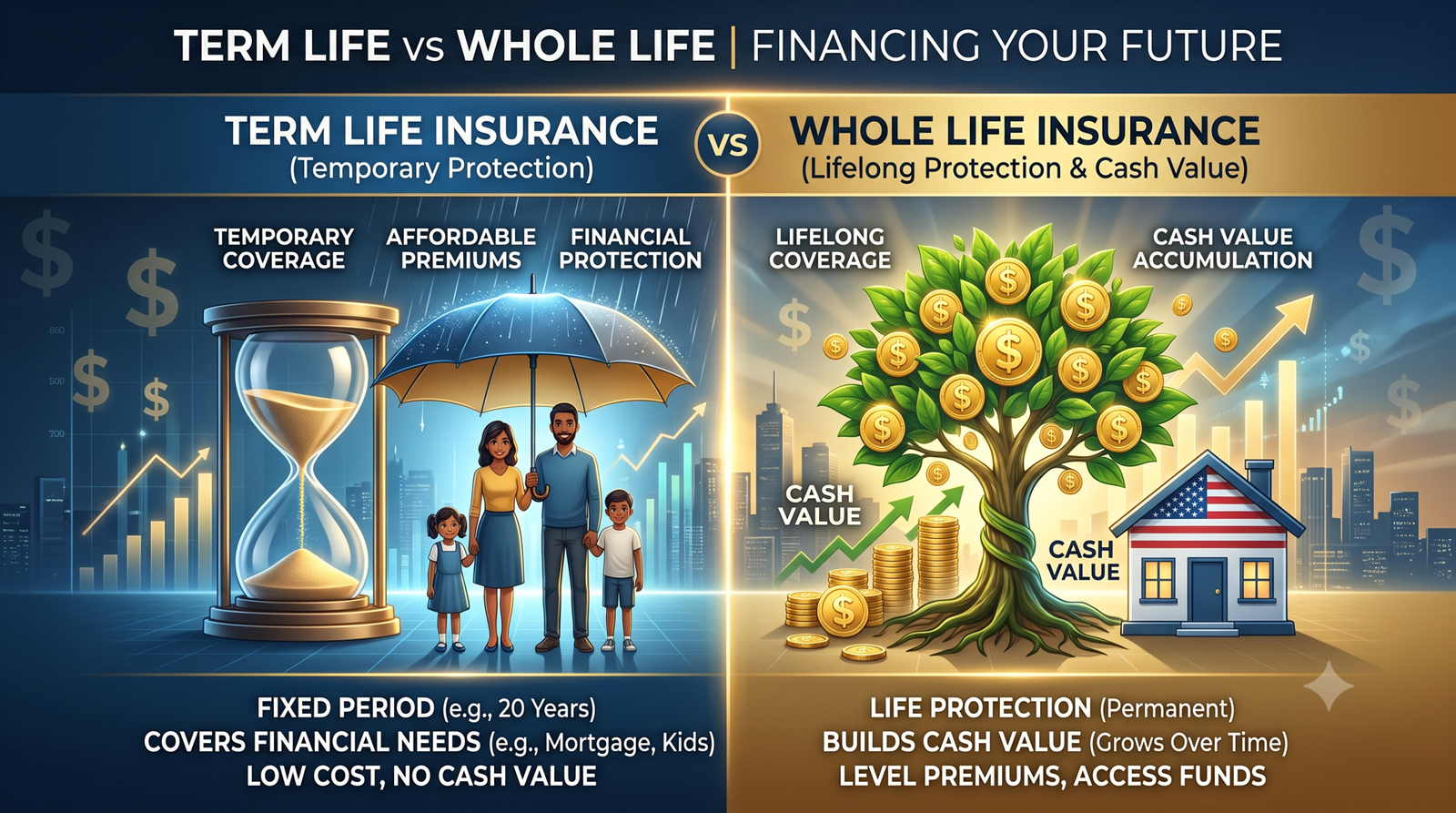
Term life insurance is coverage for a set period—typically 10, 20, or 30 years. You pay a premium, and if you pass away during that window, your beneficiaries receive the death benefit. If the term ends and you’re still alive, the coverage simply expires. No payout, no refund (unless you bought a return-of-premium rider, which raises the cost).
Think of it like renting an apartment versus buying a house. You’re paying for protection during the years you need it most—say, while your kids are growing up or while you still have a mortgage—without committing to anything beyond that window.
Because term policies don’t build any savings component, insurers can price them much lower than permanent coverage. A healthy 35-year-old might pay a relatively modest monthly premium for a 20-year, $500,000 term policy—though actual rates depend heavily on age, health, and the insurer, so any quote should come from a current, personalized source rather than a general estimate.
What Whole Life Insurance Adds to the Equation
Whole life insurance, by contrast, is designed to last your entire life, as long as premiums are paid. It also includes a cash value component that grows over time on a tax-deferred basis. Part of every premium payment goes toward the death benefit, and part goes into this savings-like account, which you can potentially borrow against or withdraw from later.
This permanence and built-in savings feature is exactly why whole life insurance costs significantly more than term life insurance for the same death benefit amount. You’re not just buying protection—you’re also funding a long-term financial vehicle that the insurance company manages on your behalf.
Some people like this because it forces a kind of disciplined savings habit alongside life insurance protection. Others find the higher cost hard to justify, especially in the early years when the cash value tends to grow slowly.
Comparing the Two Side by Side
Cost
Term life insurance is almost always cheaper, particularly for younger, healthier applicants. Whole life insurance premiums can run considerably higher for equivalent coverage because you’re paying for lifelong protection plus a savings component.
Flexibility
Term policies are straightforward: pick a term length, get coverage, and that’s it. Whole life policies offer more moving parts—cash value growth, potential dividends (with participating policies), and options to adjust premiums or borrow against the policy, though borrowing reduces the death benefit if not repaid.
Purpose
Term life insurance tends to suit people who need coverage tied to a specific financial obligation: a mortgage, a child’s years until college, or income replacement during working years. Whole life insurance is often considered by people with longer-term goals, such as estate planning, leaving a guaranteed inheritance, or covering final expenses regardless of when death occurs.
How to Decide Which One Fits Your Life
There’s no universal right answer here—it depends on your budget, your goals, and how long you actually need coverage.
Ask yourself a few honest questions. Do you need life insurance mainly to protect your family during specific years, like while raising children or paying off a home loan? Term life insurance likely covers that need at a lower cost, freeing up money you could invest elsewhere, such as in a retirement account.
Do you want coverage that never expires, plus a savings component you can tap into later? Whole life insurance might make more sense, provided the higher premium fits comfortably into your budget without straining other financial priorities.
It’s also worth considering a middle path some people choose: buying a term policy to cover peak financial responsibility years, while separately investing the premium difference in a retirement or brokerage account. This approach can, in some cases, build more wealth over time than a whole life policy’s cash value—but it requires discipline and depends on investment performance, which isn’t guaranteed.
Practical Tips / Key Takeaways
- Match your policy length to your actual financial obligations—don’t buy more years of term coverage than you need.
- Compare quotes from multiple insurers, since pricing varies more than people expect.
- If considering whole life insurance, ask specifically how the cash value grows and what fees apply in the early years.
- Reassess your coverage after major life events—marriage, a new child, a new mortgage, or paying off debt.
- Talk to a licensed financial advisor or insurance professional before committing, especially for whole life policies with long-term commitments.
- Always verify current premium rates, tax treatment, and policy terms directly with an insurer, since these details change and vary by state and provider.
Final Thoughts
Choosing between term life insurance and whole life insurance really comes down to what you’re solving for. Term life insurance offers straightforward, budget-friendly protection for a defined period, which works well for many households managing a mortgage or raising kids. Whole life insurance offers lifelong coverage and a savings element, at a meaningfully higher cost, which can suit people focused on estate planning or guaranteed lifetime protection.
Neither option is inherently better—they’re built for different goals. The most useful next step is running the numbers for your specific situation, ideally with a licensed advisor who can account for your income, dependents, health, and long-term plans, so the coverage you choose actually fits the life you’re building.