Ask ten homeowners what their mortgage rate is, and most of them will tell you instantly. Ask them to explain why that number matters so much, and you’ll get a lot of shrugging. That gap is understandable. Mortgage rates get discussed constantly in the news, but rarely in a way that connects the abstract percentage to the actual dollars leaving your bank account every month.
Understanding mortgage rates isn’t just trivia for economics nerds. It’s one of the few pieces of financial knowledge that can save or cost you tens of thousands of dollars over the life of a loan. This article walks through how interest rates translate into your monthly payment, why even small rate differences matter more than they seem, and what factors are actually within your control.
What a Mortgage Rate Actually Represents
At its core, a mortgage rate is the price you pay to borrow money for your home. Lenders aren’t lending out of generosity; they’re taking on risk and tying up capital for years, sometimes decades. The interest rate compensates them for that risk and for inflation eating into the value of the money they’ll eventually get back.
Your rate is usually expressed as an annual percentage, but it’s applied monthly to whatever principal balance remains on your loan. Early in a mortgage, most of your payment goes toward interest rather than principal, simply because the loan balance is largest at the start. As you pay down the balance over the years, the interest portion shrinks and more of each payment chips away at what you actually owe. This pattern is called amortization, and it’s the reason a 30-year mortgage can feel like you’re barely making progress in the first several years.
How Rate Changes Ripple Through Your Payment
Here’s where the math gets interesting, and where a lot of buyers underestimate the impact. Mortgage payments aren’t linear with rate changes; they compound in ways that surprise people.
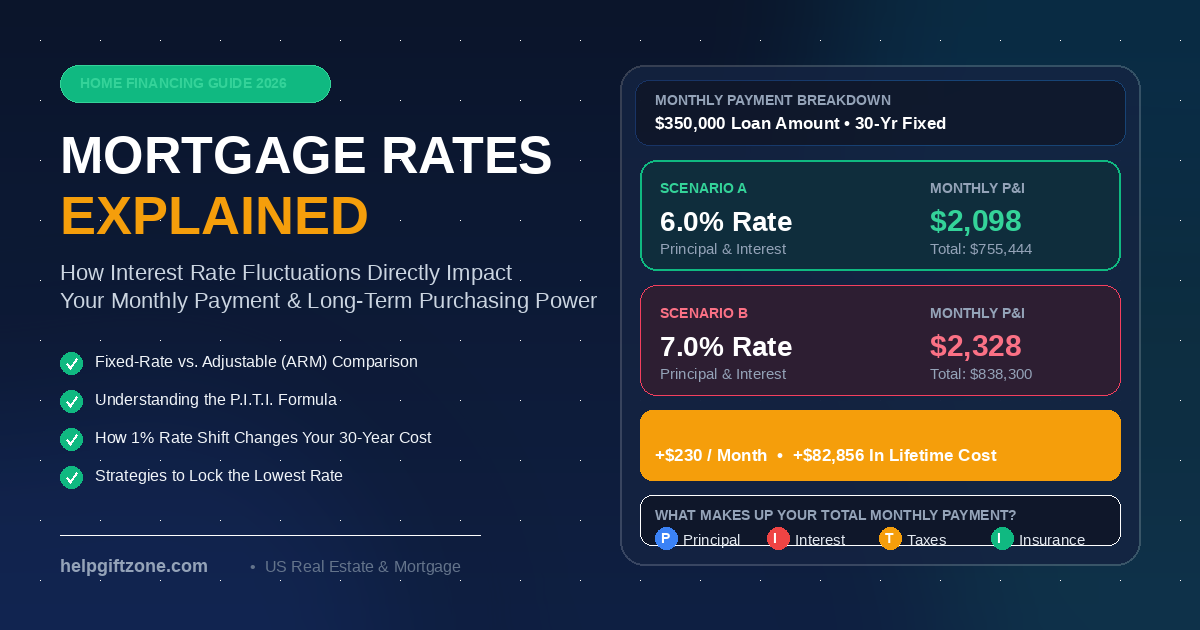
Consider a $350,000 loan over 30 years. At a lower rate, the monthly principal-and-interest payment might sit in a comfortable range. Bump that rate up by even one percentage point, and the payment doesn’t rise by a small nudge, it climbs by a noticeably larger amount each month, adding up to tens of thousands of dollars in extra interest paid over the full loan term. The exact numbers depend on your loan amount, term, and the specific rates involved, so it’s worth running your own scenario through a mortgage calculator or asking a loan officer for real figures before assuming anything.
Why Small Percentage Differences Feel So Big
A one percent difference sounds trivial when you say it out loud. But because mortgages are long-term loans with large principal balances, that “small” difference compounds across hundreds of monthly payments. This is why shopping around for a lower rate, even a fraction of a percentage point lower, is genuinely worth the effort. It’s also why locking in a rate at the right moment can matter more than people expect.
What Influences the Rate You’re Offered
Mortgage rates move for two broad reasons: the wider economic environment, and your personal financial profile.
On the macro side, rates are shaped by factors like inflation expectations, central bank policy, and the bond market, particularly the yield on long-term government bonds. These forces are largely outside any individual borrower’s control, and they shift based on economic data, so current rate levels should always be checked against up-to-date sources rather than assumed from memory or older articles.
On the personal side, lenders look at things like your credit score, your down payment size, your debt-to-income ratio, and the type of loan you’re choosing. A stronger credit profile and a larger down payment typically signal lower risk to a lender, which can translate into a better rate offer. This is the part of the equation you actually have leverage over, and it’s worth addressing months before you apply, not the week before.
Fixed vs. Adjustable Rates: A Different Kind of Risk
Beyond the rate itself, the type of rate matters. A fixed-rate mortgage locks your interest rate for the entire loan term, so your principal-and-interest payment stays the same whether the broader market rate rises or falls later. This predictability is comforting for many households, especially those planning to stay in a home for a long time.
An adjustable-rate mortgage, often called an ARM, starts with a rate that may be lower than a fixed rate for an initial period, then adjusts periodically based on market conditions. This can work in a borrower’s favor if rates fall, or work against them if rates rise. ARMs aren’t inherently bad, but they carry a different risk profile that suits some financial situations better than others, particularly shorter ownership horizons.
Practical Tips / Key Takeaways
- Get quotes from multiple lenders. Rate offers can vary meaningfully between institutions for the same borrower.
- Improve your credit score before applying if you have time to spare; even a modest improvement can shift your rate offer.
- Ask lenders for an amortization schedule so you can see exactly how your payment splits between interest and principal over time.
- Understand the difference between your interest rate and your annual percentage rate (APR), which includes certain fees and gives a fuller picture of borrowing cost.
- Don’t chase the lowest advertised rate blindly; check for points, fees, and prepayment penalties that affect the real cost.
- Run your own numbers through a mortgage calculator using current rates rather than relying on rates quoted in older articles or general estimates.
The Bottom Line
Mortgage rates aren’t just a headline number that economists argue about. They directly shape how much home you can afford, how quickly you build equity, and how much you’ll ultimately pay for the roof over your head. A seemingly small difference in your mortgage rate can mean a meaningfully different monthly payment and a substantial difference in total interest paid over decades.
The good news is that while broader economic forces are outside your control, several factors that influence your specific rate offer are not. Building strong credit, saving for a larger down payment, and comparing offers from multiple lenders are all steps you can take before signing anything. Before making any final borrowing decision, verify current mortgage rates and terms with a licensed lender or financial advisor, since rates shift with market conditions and this article is meant to explain the mechanics, not to substitute for personalized financial guidance.