
Introduction
Education has changed significantly with the development of digital technology. In the past, most students attended schools, colleges, and universities to receive education through traditional classroom teaching. Today, online learning has become another popular option, allowing students to study from almost anywhere using computers, tablets, and smartphones.
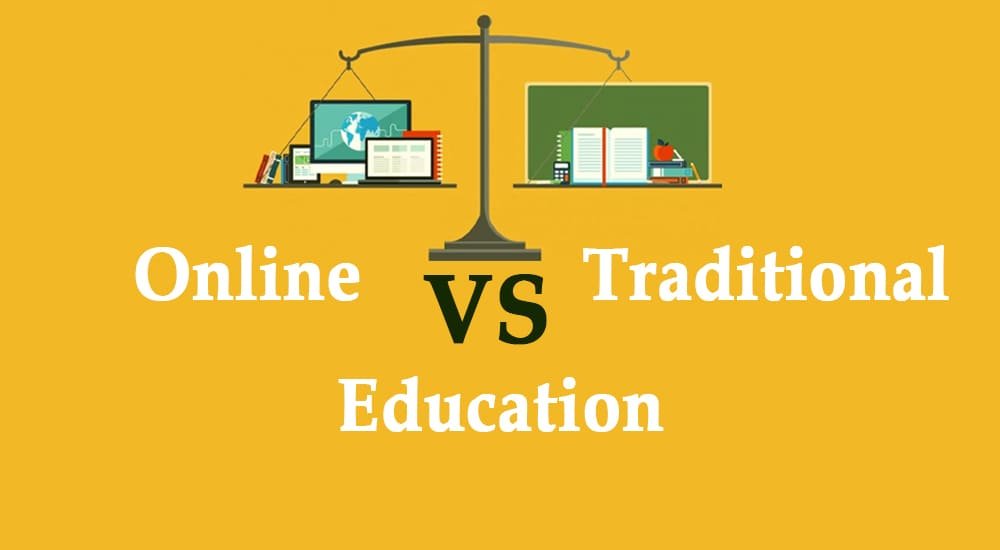
Both online learning and traditional education offer valuable benefits. Online education provides flexibility and convenience, while traditional education offers direct interaction, structured learning, and face-to-face communication.
However, choosing between these two learning methods can be challenging. The right option depends on a student’s learning style, personal responsibilities, educational goals, and available resources.
In this article, we will explore the differences between online learning and traditional education to understand which approach may be more suitable for different students.
1. What Is Online Learning?
Online learning is an educational method in which students study using internet-based platforms and digital resources.
Students can attend live virtual classes, watch recorded lectures, download study materials, complete assignments, and communicate with instructors online.
Many educational institutions and independent learning platforms offer online courses in subjects such as business, technology, science, mathematics, and language learning.
One major advantage of online learning is that students can often choose when and where they study.
Some courses follow fixed schedules, while others allow learners to complete lessons at their own pace.
This makes online education particularly useful for working professionals, parents, and students who need flexible schedules.
2. What Is Traditional Education?
Traditional education is based on classroom teaching in physical educational institutions such as schools, colleges, and universities.
Students attend classes according to a fixed timetable and learn directly from teachers.
Traditional education usually includes classroom lectures, group discussions, laboratory activities, examinations, homework, and extracurricular activities.
One of its biggest advantages is direct communication. Students can ask questions, participate in discussions, and receive immediate guidance from teachers.
Physical classrooms also provide opportunities to build friendships, develop teamwork skills, and participate in social activities.
3. Flexibility and Convenience
Flexibility is one of the biggest differences between online and traditional education.
Online learning allows students to study from different locations. They may be able to access recorded lessons, complete assignments during convenient hours, and organize their schedules around work or family responsibilities.
For example, someone working full-time can take an online course in the evening without attending a physical classroom.
Traditional education generally follows a fixed timetable. Students must travel to their institutions and attend classes at scheduled times.
Although this structure may be challenging for some learners, it can help students develop discipline and maintain consistent study habits.
Winner: Online learning offers greater flexibility, while traditional education provides a more structured routine.
4. Learning Experience and Student Interaction
Student interaction is another important factor.
Traditional classrooms provide direct communication between teachers and students. Learners can participate in discussions, work in groups, and receive immediate feedback.
This environment can be especially helpful for students who learn better through conversations and practical activities.
Online learning also offers interaction through video meetings, discussion forums, messaging systems, and virtual group projects.
However, online communication may not always provide the same experience as face-to-face interaction.
Students who enjoy classroom discussions and social learning may prefer traditional education.
5. Cost and Affordability
The cost of education can influence a student’s decision.
Online courses are sometimes more affordable because they may reduce transportation, accommodation, and campus-related expenses.
Some platforms also provide free educational courses, allowing learners to develop new skills without paying tuition fees.
However, online learning may require a computer, smartphone, internet connection, and sometimes paid subscriptions.
Traditional education can involve tuition fees, transportation costs, books, accommodation, and other expenses.
The actual cost depends on the institution, location, course, and educational program.
Winner: Online learning can be more affordable, although costs vary significantly between courses and institutions.
6. Discipline and Time Management
Online learning requires students to manage their time effectively.
Without regular classroom attendance, some learners may struggle to remain motivated or complete assignments on schedule.
They must create study routines, avoid distractions, and take responsibility for their progress.
Traditional education provides a structured timetable that encourages regular attendance and consistent learning.
Teachers and classmates can also help students remain motivated.
For individuals who struggle with self-discipline, a traditional classroom environment may be more suitable.
7. Access to Educational Resources
Online education provides access to a wide variety of digital resources.
Students can explore electronic books, research papers, recorded lectures, educational videos, and interactive learning materials.
They can also learn from instructors and institutions located in different countries.
Traditional education offers access to physical libraries, laboratories, classrooms, and institutional facilities.
Many schools and universities now combine physical resources with digital learning systems.
Both methods can provide excellent educational resources when properly organized.
8. Which Method Is Better for Practical Subjects?
Some subjects require practical training, laboratory experiments, equipment, or direct supervision.
For example, medical training, engineering laboratories, scientific experiments, and certain technical courses often require hands-on experience.
Traditional education can provide better opportunities for these activities because students have access to physical facilities and instructors.
Online learning can still support practical education through simulations, demonstrations, and virtual laboratories.
However, virtual experiences cannot completely replace every form of real-world practical training.
9. Can Online and Traditional Education Work Together?
Yes. A combination of online and traditional education is commonly known as blended learning.
This approach combines classroom teaching with digital learning resources.
Students may attend physical lectures while using online platforms for homework, revision, educational videos, and additional practice.
Blended learning provides the advantages of both methods.
Teachers can explain important concepts in classrooms while students use digital tools to explore subjects in greater depth.
This approach can make education more flexible without removing the benefits of direct interaction.
10. Which Learning Method Should Students Choose?
There is no single answer that works for every student.
Online learning may be suitable for people who:
-
Need flexible study schedules.
-
Prefer learning independently.
-
Have reliable internet access.
-
Want to develop additional professional skills.
-
Need access to courses unavailable locally.
Traditional education may be suitable for students who:
-
Prefer direct teacher interaction.
-
Learn better in structured environments.
-
Need laboratory or practical training.
-
Enjoy classroom discussions.
-
Want regular social interaction.
Before choosing a course, students should consider its quality, recognition, teaching methods, cost, and career relevance.
Conclusion
Online learning and traditional education both play important roles in modern education. Online learning offers flexibility, convenience, and access to digital resources, while traditional education provides structured teaching, personal interaction, and practical experiences.
The best choice depends on individual needs and educational objectives.
Rather than viewing these methods as competitors, students and educational institutions can combine their strengths to create better learning experiences.
Ultimately, successful education depends not only on where students learn but also on their dedication, curiosity, discipline, and willingness to develop new knowledge and skills.